What is Relative Equilibrium of Fluids?
Relative equilibrium occurs when a fluid mass moves as a rigid body – meaning there’s no relative motion between fluid particles, even though the entire fluid mass may be accelerating or rotating. Think of it as the fluid “going along for the ride” with its container without sloshing around internally.
Types of Relative Equilibrium of Fluids
- Linear Acceleration
– Horizontal Motion
– Vertical Motion - Rotational Motion
Horizontal Motion
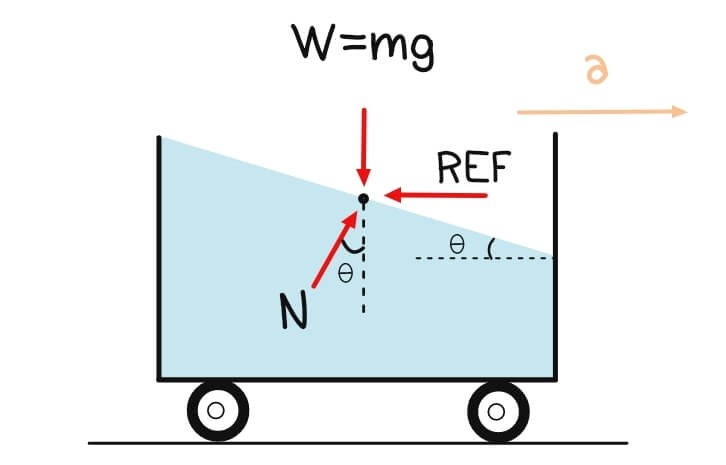
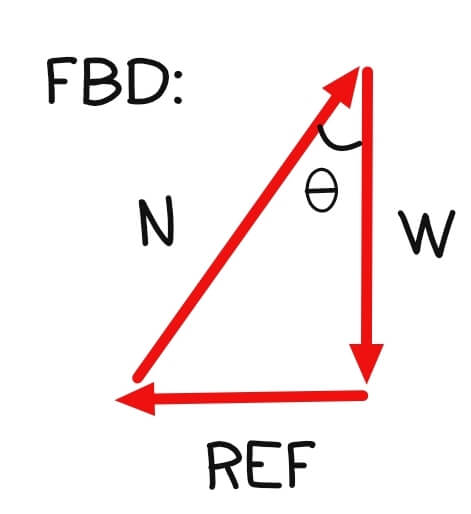
Solve for ACCELERATION:
![\[tan \theta =\frac{a}{g}\]](https://civilengghub.com/wp-content/ql-cache/quicklatex.com-3d7ebaeda875713cacde65cea6ce3545_l3.png "Rendered by QuickLaTeX.com")
where: = angle of free surface
a = horizontal acceleration 
g = gravitational acceleration 
Solve for FORCE:
![\[F = ma\]](https://civilengghub.com/wp-content/ql-cache/quicklatex.com-0d61cb546d4dbe0f31a7e4f3b5d4d930_l3.png "Rendered by QuickLaTeX.com")
where:
a = acceleration
m = mass of the tank + mass of the fluid
Inclined Motion
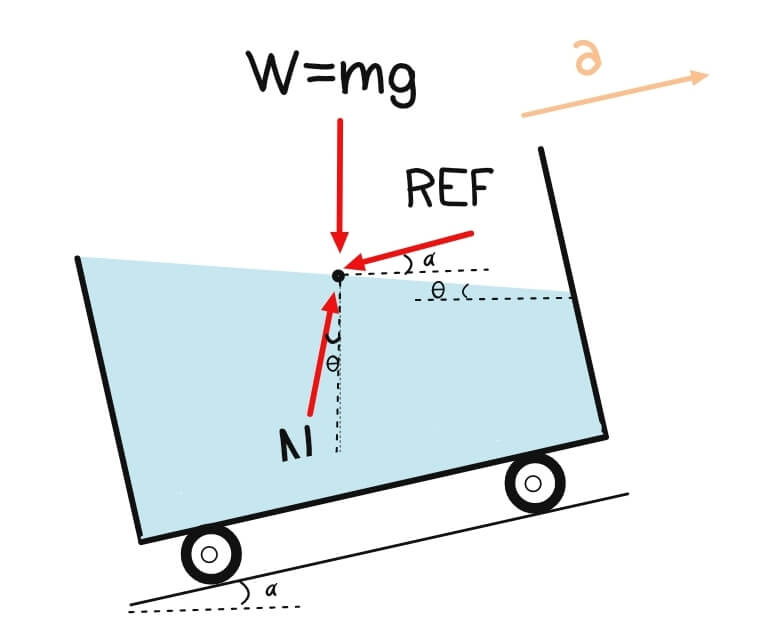
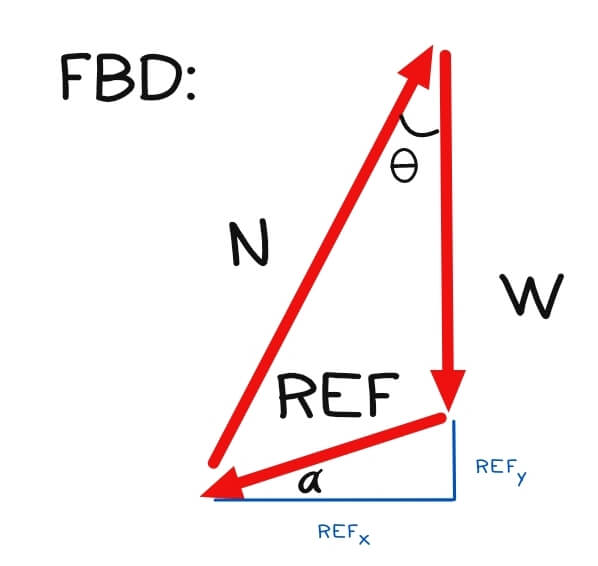
Solve for ACCELERATION:
![\[tan \theta = \frac{a \: cos\alpha}{g \pm a \: sin \alpha} \]](https://civilengghub.com/wp-content/ql-cache/quicklatex.com-f2c480238ec9123734caa4d310a9010c_l3.png "Rendered by QuickLaTeX.com")
Vertical Motion
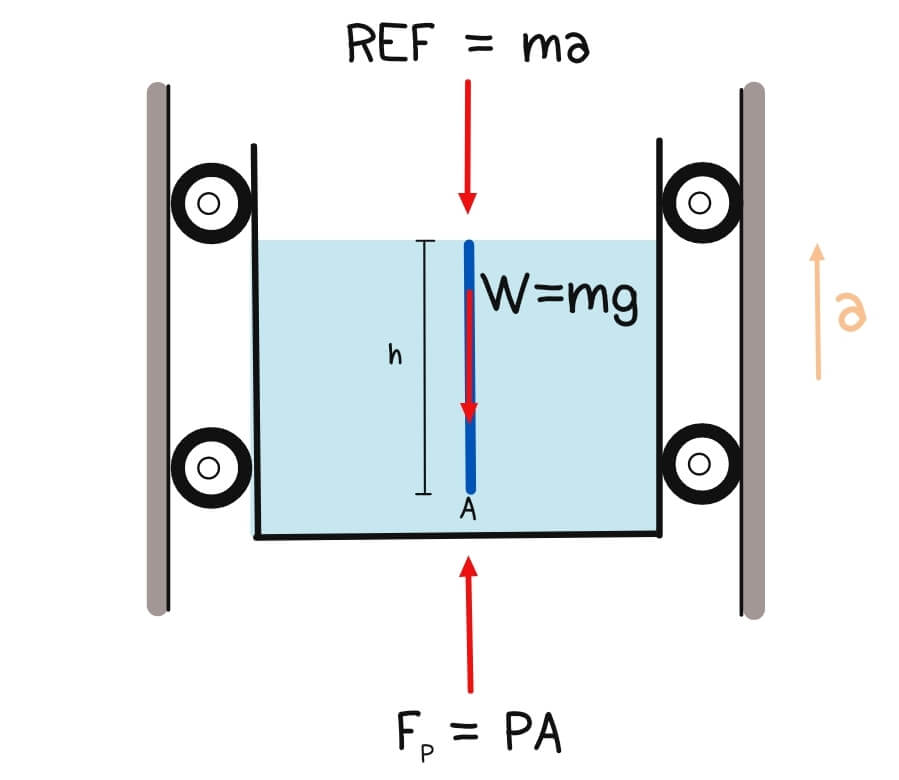
In a closed tank:
Rotational Motion
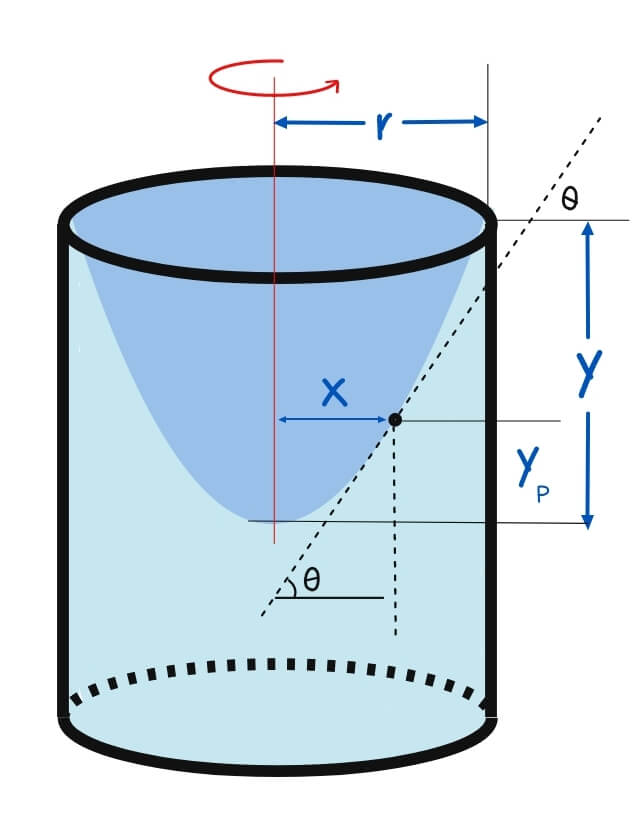
Slope of the Fluid Surface:


![\[y_p = \frac{\omega^2x^2}{2g}\]](https://civilengghub.com/wp-content/ql-cache/quicklatex.com-e1ce5cacfa4ae7e6b99a76061a4be6fa_l3.png "Rendered by QuickLaTeX.com")
![\[y = \frac{\omega^2r^2}{2g}\]](https://civilengghub.com/wp-content/ql-cache/quicklatex.com-e02e0d75c6247905ea1993d380b024ab_l3.png "Rendered by QuickLaTeX.com")
Paraboloid Equation:
![\[y = \frac{\omega^2 r^2}{2g}\]](https://civilengghub.com/wp-content/ql-cache/quicklatex.com-0e20aa72f86603fece7c6eef8f135129_l3.png "Rendered by QuickLaTeX.com")
where:
y = Height above the lowest point of the parabola = Angular velocity (rad/s)
r = Radial distance from rotation axis
g = Gravitational Acceleration (9.81 m/s^2)
Squared Property of Paraboloid:
![\[\frac{r_1^2}{y_1}=\frac{r_2^2}{y_2}\]](https://civilengghub.com/wp-content/ql-cache/quicklatex.com-4c5d4aa20c7d90550ad9b29fad7817d4_l3.png "Rendered by QuickLaTeX.com")
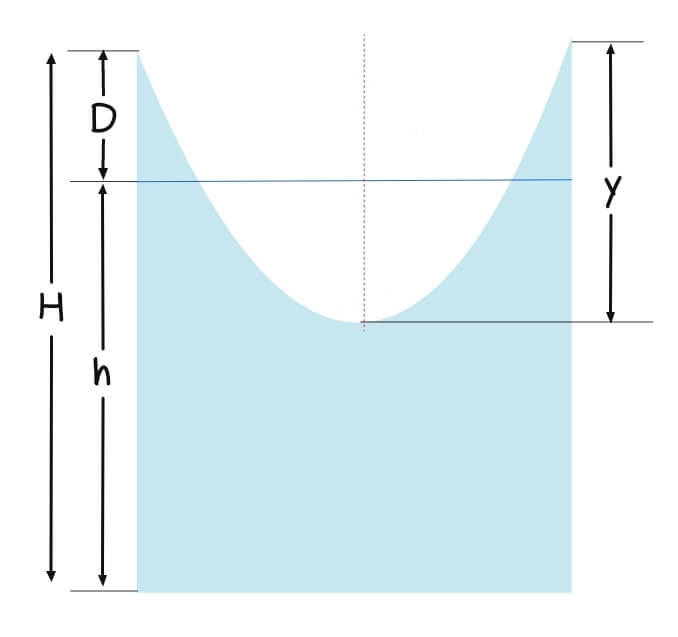
Volume Spilled
![\[ V_{spill}=V_{paraboloid} - V_{cylinder}\]](https://civilengghub.com/wp-content/ql-cache/quicklatex.com-04f24426a0f3a524c015e81220f7048c_l3.png "Rendered by QuickLaTeX.com")
![\[V_{spill}=\frac{1}{2} \pi r^2h - \pi r^2D\]](https://civilengghub.com/wp-content/ql-cache/quicklatex.com-edf4d16d8b530c79133c4dcabc073210_l3.png "Rendered by QuickLaTeX.com")
where:
Volume of the Cylinder:

Volume of the Paraboloid:
Volume Left:
![\[V_{left}=V_{original}-V_{spill} \]](https://civilengghub.com/wp-content/ql-cache/quicklatex.com-3e72cde75e581e06e3a953f57b1f2b90_l3.png "Rendered by QuickLaTeX.com")
![\[\pi r^2 h_{new} = \pi r^2 h_{original} - V_{spill} \]](https://civilengghub.com/wp-content/ql-cache/quicklatex.com-eecd971e8564b6c37464c350a3eab7d6_l3.png "Rendered by QuickLaTeX.com")
Fluid Mechanics Cheat Sheet

References:
Cengel, Y. A., & Cimbala, J. M. (2018). Fluid mechanics: Fundamentals and applications (4th ed.). McGraw-Hill Education.
Fox, R. W., McDonald, A. T., & Mitchell, J. W. (2020). Fox and McDonald’s introduction to fluid mechanics (10th ed.). John Wiley & Sons.
Mathalino. Fluid Mechanics and Hydraulics
Munson, B. R., Rothmayer, A. P., Okiishi, T. H., & Huebsch, W. W. (2016). Fundamentals of fluid mechanics (8th ed.). John Wiley & Sons.